live performance (premiere)
23 Sept 2025
Cukrarna
part of TO)pot festival
tremolo explores the occurrence and communication levels of vibrational sound in insects within specific ecosystems.
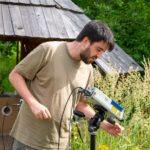
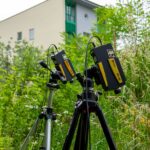
tremolo brings together artists, scientists, and both environmental and artistic institutions to explore vibrational communication among insects and its integration into broader ecological and urban spatial contexts. The project investigates sound that travels through materials—branches, leaves, soil—uncovering an invisible, embodied layer of communication in nature that is largely inaudible to the human ear. It combines scientific research on vibrational communication in insects with artistic interpretation in the form of sound art. It is situated within a broader ecological and urban-spatial context. The musicians use sound that travels through natural materials and objects to reveal invisible, embodied layers of communication that are mostly inaudible to the human ear. The scientific analysis of the sonic material plays a crucial role, as it provides the musicians with a verified insight into the acoustic matter. Some of these sounds are already identified and classified, while many remain completely new even to scientists. At times, their characteristics resemble known categories and, through additional identification procedures, are added as new entries to the database. Often, however, it remains unclear whether a sound originates from a natural source at all, as they are collected in urban environments where many factors influence their appearance.
This blend of scientific and artistic approaches in the creation of the project—where science serves as a foundation for sound art—embodies a form of creative collaboration that helps make the complexity of artistic processes more accessible to the wider public. tremolo is thus not merely a musical work to be experienced with the ears alone, but through its method it also embodies a complex reflection on the human relationship to urban habitats—those often-overlooked “third landscapes”: abandoned or waiting areas that have slipped through the cracks of urban planning. These are liminal zones on standby for intensive human use, where, in the meantime, unique habitats with high biodiversity emerge. Krater in Ljubljana is one such site.
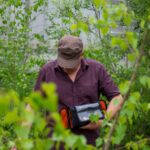
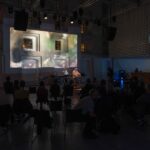
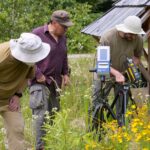
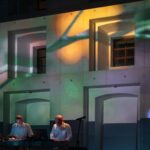
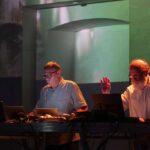
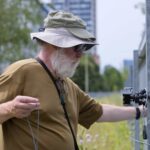
Brane Zorman is an intermedia artist, composer, sound manipulator, producer, and curator. He composes sound works for theatre, intermedia, and dance performances. His electro-acoustic solo compositions and improvisations with local and international artists are performed in spatial sound. In relation to sound and space, he develops various strategies, techniques, dynamic and interactive modules, records and reinterprets soundscapes, and uses sophisticated tools to create electronic and acoustic sound sculptures.
Boštjan Perovšek is an artist, composer, and sound designer who creates experimental electro-acoustic music. He is known for his bioacoustic compositions, which are based on animal sounds, especially those of insects. He is also a member of the groups Jata C and SAETA, and creates music for film, theatre, performances, multimedia installations, and soundscapes for museums and galleries.
Juan José López Díez is a biotremologist with a deep curiosity for vibrational communication in insects. He is passionate about using sound to generate and exchange knowledge, bridging the gap between art and science, raising awareness of urgent ecological issues, and expanding our understanding of acoustic ecology.
PREVIOUS PERFORMANCES
live performance (composition preview)
8 June 2025
Niansa Festival
COLOPHON
Concept: Boštjan Perovšek, Brane Zorman, Juan José López Díez
Composition: BBtrem. (Boštjan Perovšek, Brane Zorman)
Video: Matej Tomažin
Photography: Matej Tomažin, Jan Dolar (Dolar Media), Blaž Gutman, MGML archive
Original recordings of wildlife and urban environments: Juan José López Díez, Boštjan Perovšek, Brane Zorman
Wildlife sound archive:
National Institute of Biology, Juan José López Díez
Scientific consultant: Juan José López Díez
Partners:
National Institute of Biology, Krater Creative Laboratory
Production: Cona 2024/2025